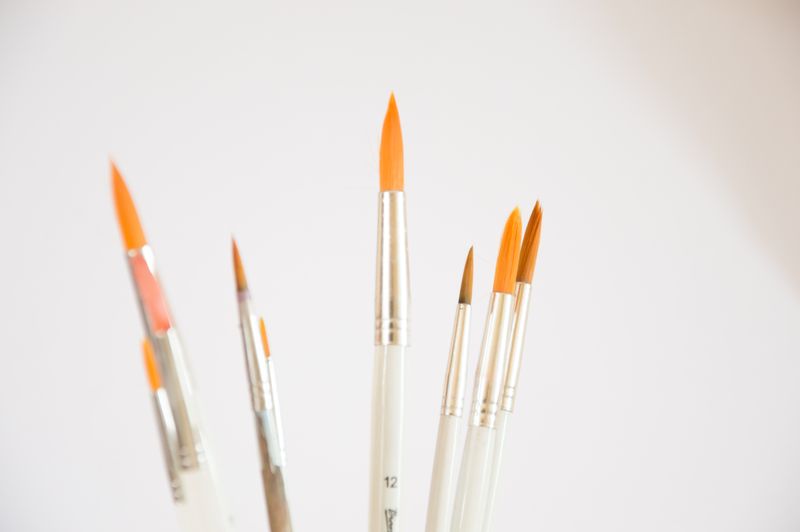
Series 40 — Kolinsky sable
Winter-tail Kolinsky, dressed in-house, tied in the round and set with two-part resin. Rounds, pointed rounds and a spotter. Every head is water-tested at the bench before crimping; the belly should hold a load and the point should return without coaxing.
Handles are English-turned birch, seven coats, in the plain black we have used since 1968. Sizes 8 and above are also available with a long handle to order.

Series 62 — Squirrel and mixed natural hair
Pure squirrel mops in traditional quill sizes, plus a squirrel-and-synthetic blend for people who want the load without the price. The quill-set brushes are still bound with wire over natural quill, which is slow and the reason the lead time is longer.
Squirrel carries an enormous amount of water and almost no spring. It is the right brush for a wet wash and the wrong one for detail, and we would rather say so than sell it as an all-rounder.

Series 18 — Interlocked hog bristle
Chungking hog, interlocked so the natural curve of each bristle works against its neighbour and the head keeps its shape under a stiff oil. Sizes 1–12 in four shapes, long handle throughout.
Interlocking is a hand operation and it is what separates a hog brush that holds an edge for a season from one that splays in a fortnight.

Series 77 — Synthetic filament
Tapered filament in three diameters blended to a profile that mimics sable spring without the cost. The rigger holds a nine-centimetre line; the fan is the one line we make with a shorter filament than the trade standard because the standard one collapses in acrylic.
This series takes the most abuse in colleges and is the one we most often see returned for reworking, which is possible on any Series 77 head.
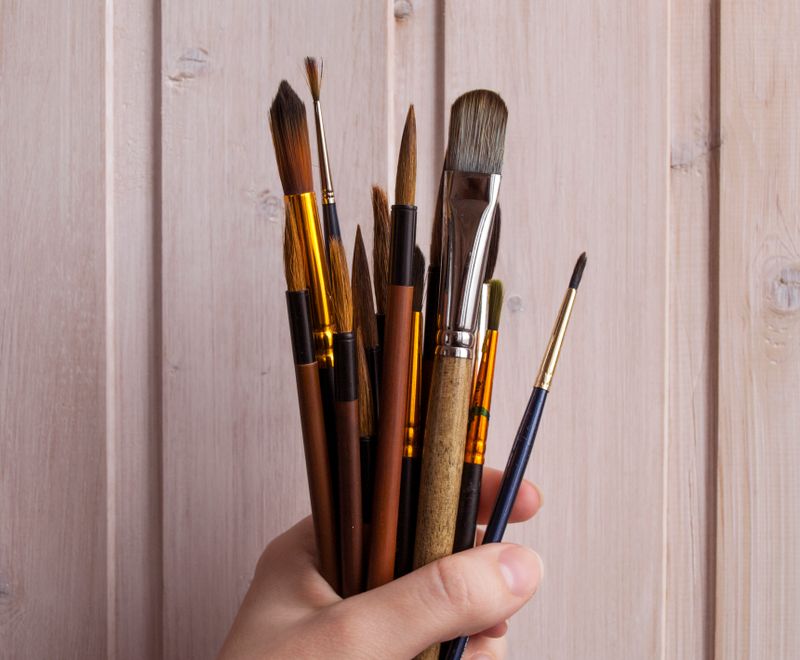
Series 90 — Wash brushes and hakes
Goat-hair hakes on flat timber handles, stitched rather than ferruled, for large wet washes and for gesso. Also a 50 mm synthetic wash brush for acrylic priming, which is the only brush we make that is deliberately built to be replaced.
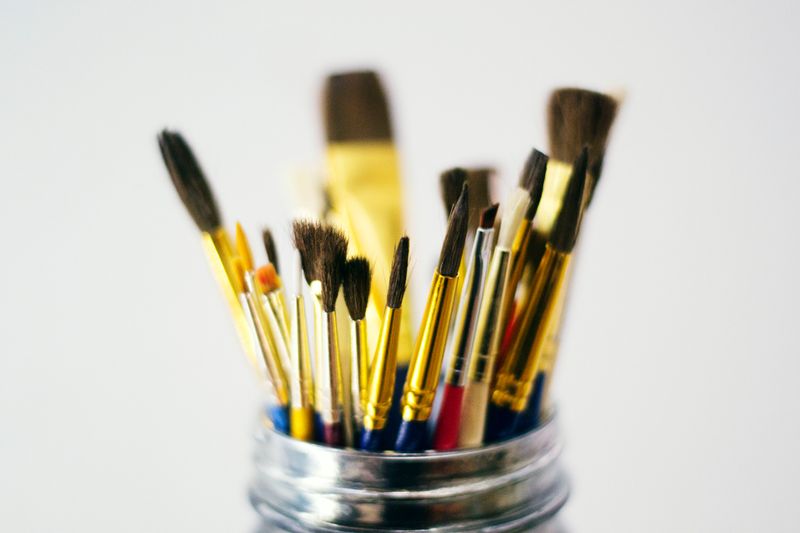
Series 12 — Education and institutional
Built for a term of foundation students: short handles, aluminium ferrules that survive being left in water, and a filament chosen for recovery rather than finish. Sold in assorted packs of thirty and by the gross for departments.
Heads can be sent back for reworking at a third of the new price, in batches of fifty or more. Roughly two-thirds of the brushes we rework come from four colleges who have done it for years.